
Balance is at the core of contemporary homes, and it can be achieved with open floor plans, straight lines, and detail. Lighting is often the final piece of that puzzle that determines how that balance feels when the sun goes down. And this is where recessed lights come into play. Also referred to as downlights or can lights, they disappear into ceilings and become part of the architecture, allowing the space to breathe while illuminating it with clarity that does not clutter.
Visual Comfort recessed lighting and similar options come in slim profiles and provide a gracious, orderly light to interiors, whether a small apartment or a spacious family home. Placed correctly, they illuminate the house, creating warmth, depth, and rhythm, with every glow supporting the mood of the space. The addition of this small design influences how the space feels on a daily basis.
Enhances The Perceived Space and Depth
A room can appear calmer, wider, and taller with recessed lighting. Their flush design allows the eye to freely move by removing visual weight from the ceiling. The space is opened by the smooth layers of light that flow across the ceiling and walls. This effect is powerful in smaller spaces.
The light disperses uniformly from above rather than being broken by a single hanging fixture. Colors brighten, shadows become softer, and confined corners appear roomy. This effect is used by designers to emphasize openness without introducing extra clutter. Recessed lights, when properly positioned, frame a space like silent architecture. Without drawing attention to itself, each glow adds depth. The end effect is a room that feels alive and in balance.
Setting the Mood Through Layered Light
Light sets the mood in a house. Recessed lights help control and shape that feeling. They make it easy for the homeowner to switch from a bright, busy space to a softer, more relaxed one. Dimmers are very important here because they let each room have more than one mood. During the day, a kitchen can feel fresh and awake, but after dinner, it can feel soft and calm.
You can have different types of light in your living room, like one for reading, one for talking, and one for quiet nights. The color tone is also essential; cooler whites make things clearer, while warmer whites make things more comfortable. The flexibility makes lighting more than just a tool; it becomes a way to express yourself. When you have recessed lights, every mood feels planned. The house tells a different story with each change in tone.
Energy Efficiency and Cost Benefits
LED recessed lights are a combination of beauty and utility. LEDs use a lot less power than older bulbs and last for a long time. That means you won’t have to pay as much or replace things as often. They also make less heat, which helps keep rooms cooler in the summer. You can light up an entire room with recessed lights if you plan them out well.
The light spreads out evenly, so it fills in corners that lamps might miss. This balance between brightness and energy use is suitable for smart living. The savings add up over time, and the house still looks nice. LED recessed lights also need less maintenance because they are so reliable. Each light works well all the time with little effort.
Highlighting Architectural Features
Every house has unique features that are worth highlighting, such as wooden beams, a framed painting, a curved staircase, or a textured wall. Recessed lighting precisely highlights those details. The color of a work of art or the grain of a wall panel can be seen through a single beam. Drama is added without glare by using soft, focused light. It is used by designers to transform structural components into eye-catching features.
Like sunlight tracing across surfaces, the method seems organic. This method adds depth and personality to living areas. Walls seem richer in tone, hallways longer, and ceilings higher. There is a subtle sense of design awareness with every placement. It serves as a reminder that details are what make a thing beautiful.
Harmony with Modern Design Trends
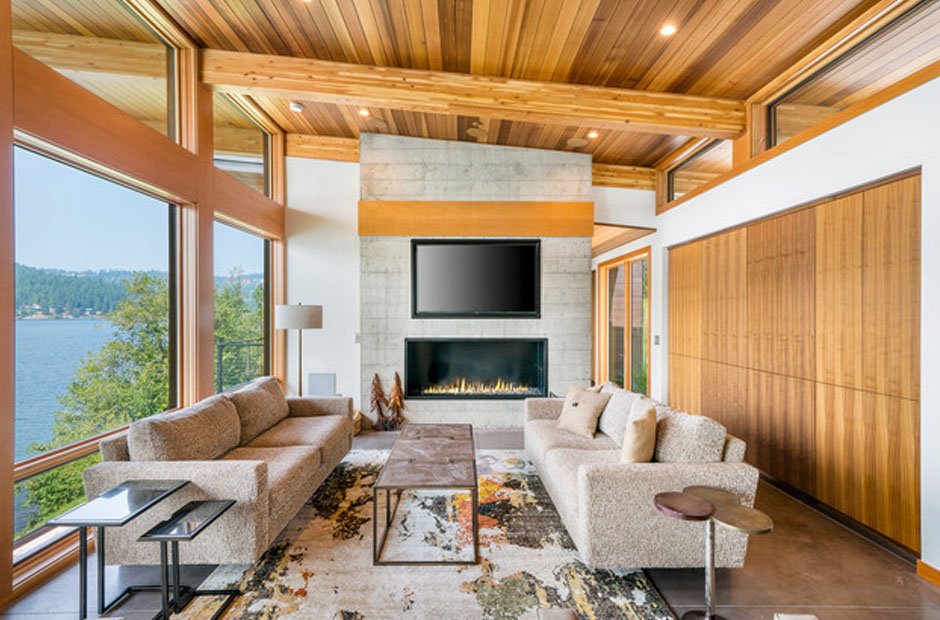
Simple lines and clean surfaces are preferred in modern design. That vision is perfectly aligned with recessed lights. They provide intense illumination while maintaining a smooth and unbroken ceiling. Their understated style goes well with organic materials like metal, stone, and wood. They work well in open floor plans where ornamentation is less critical than visual flow.
Designers like how these lights blend in with the surroundings while using light to define space. They blend in well with minimalist apartments, beachside hideaways, and industrial lofts. Because of their adaptability, homeowners can update interiors over time without having to replace any fixtures. Because they combine style and functionality, recessed lights have enduring appeal. Their presence is never obtrusive and feels necessary.
Recessed lights do more than brighten a room, as they are responsible for shaping how a home feels and functions. The subtle design of credible Visual Comfort recessed lighting and similar options supports clean architecture, balanced light, and personal comfort. Each placement carries intention, turning light into texture and tone. For homeowners who value simplicity and depth, recessed lights strike the perfect note.