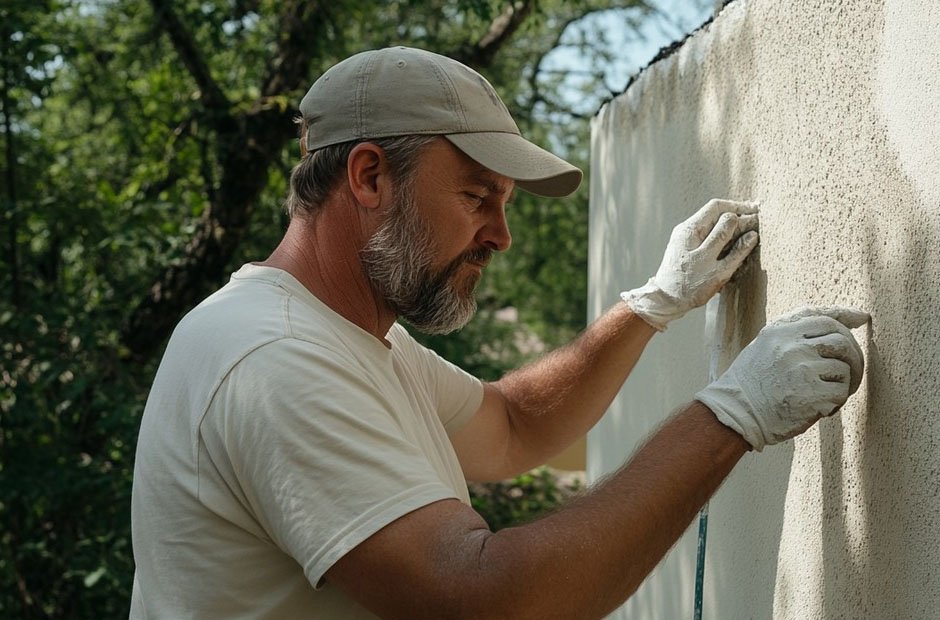

Aging stucco often shows subtle signs of wear, like faint discoloration or surface chalking, long before major cracks appear. Homeowners can halt this progression using invisible penetrating treatments that restore water resistance without changing the original look. These methods extend surface life significantly when applied correctly during optimal seasonal windows.
Spotting Early Stucco Distress Signals
Stucco surfaces develop vulnerabilities over time due to constant exposure to rain, splashback, and airborne pollutants. Fine cracks wider than a hairline signal moisture entry points where internal damage brews unseen. White powdery efflorescence along the base indicates migrating salts from absorbed water evaporating through the surface.
Texture changes provide additional clues—roughened areas feel softer when scratched with a fingernail, hinting at binder leaching. In humid climates like Quezon City’s, black spotting from algal growth accelerates binder breakdown. Catching these indicators early prevents costly full resurfacing later.
Mechanics of Penetrating Protection Formulas
These treatments soak deep into the stucco matrix, chemically reacting with cement particles to form water-repellent zones around each pore. Unlike surface films that trap existing moisture, penetrating formulas create one-way barriers—liquid water beads off outside while internal vapor diffuses outward freely.
Silane and siloxane compounds dominate effective recipes, migrating 1/8-inch deep for durable bonding. Breathability ratings above 90 percent ensure no blistering under direct sunlight. Low-surface-tension delivery lets treatments wick into tight fissures automatically during application.
Choosing Application Windows Strategically
Late dry season timing maximizes success, allowing full curing before heavy rains return. Target ambient temperatures holding steady between 45-85°F with low humidity under 60 percent. Avoid direct midday sun, as it accelerates flash drying and uneven absorption.
Morning applications finish before afternoon breezes carry dust onto wet surfaces. Multi- day forecasts showing no precipitation for 72 hours after treatment ensure proper hardening. Coastal dwellers gain advantage from steady ocean-moderated temperatures year-round.
Preparation Sequence for Maximum Adhesion
Pressure washing at 1500 PSI removes embedded grime without eroding the face coat. Biodegradable cleaners tackle organic staining safely. Allow at least 3 full sun-dry days— test by pressing plastic sheeting overnight; persistent dampness underneath means wait longer.
Scrub loose particles with stiff nylon brushes, then vacuum crevices. Spot-prime hairline cracks under 1/16-inch with a 50:50 formula dilution using a paintbrush. Mask adjacent glass, metal trim, and vegetation with plastic sheeting, taping the edges.
Master Application for Uniform Results
Select pump-up sprayers with fan nozzles that adjust from pinpoint to 12-inch-wide patterns. Fill halfway initially to test flow without spills. Start at the top courses working downward in 3-foot horizontal bands, saturating until steady runoff sheets appear below.
Pause 20-40 minutes between flood coats and inspect for dry-through. Porous substrates swallow first applications completely, demanding second and sometimes third passes.
Total consumption doubles on rough textures versus smooth troweled finishes.
Work wet edges into adjacent sections immediately. Feather boundaries by back-brushing lightly. Coverage calculators predict 75-125 square feet per ready-to-use gallon undiluted.
Curing Expectations and Reinspection Schedule
Touch-dry within 90 minutes supports light foot traffic. Full repellency develops over 48- 72 hours as solvent carriers evaporate completely. Water bead tests confirm success— droplets should sit perched high rather than spreading flat.
Annual late-summer probes check remaining repellency. Chalking or flattened beads signal refresh time, typically every 42-60 months, depending on exposure. Previously treated surfaces can be re-applied directly without stripping.
Versatility Across Stucco Variations
Unpainted traditional three-coat systems respond best, regaining factory-fresh resistance. Integral color stucco maintains exact hues since no topcoat alters appearance. Chimney crowns and pillar bases benefit disproportionately from runoff concentration protection.
Interior accent walls gain mold resistance for high-humidity bathrooms. Historic restoration projects specify vapor-permeable treatments that match the original breathability profiles exactly.
Beyond Water—Added Defense Layers
Effective formulas simultaneously block oil penetration from vehicles or equipment, simplifying stain removal. Acid rain neutrality preserves long-term surface pH balance. UV stabilizers counter sun-induced chalking even on north exposures.
Typhoon-prone regions experience 35 percent less erosion post-treatment, according to engineering studies. Property appraisers note protected exteriors boost resale values by 4- 7 percent through verified longevity claims.
Restoring stucco with targeted, invisible protection reinstates full service life at an economical cost. Mid-year timing aligns perfectly with dry spells for flawless execution. Diligent surface prep, paired with the saturation technique, guarantees results that last for multiple seasons. Professional-grade penetrating sealers like Rainguard stucco sealer exemplify this restoration approach through deep migration and sustained performance.