
Truck accidents present a significant risk on American roadways, often resulting in severe consequences for everyone involved. Despite this, many people still believe outdated or incorrect information about these incidents, which can hinder prevention efforts. By addressing these pervasive misconceptions, both truck drivers and other motorists can be more informed and safer on the road. For those who have been involved in such incidents, an Indianapolis truck accident lawyer can provide guidance and support through the legal process.
Accurate knowledge is essential to maintaining safety, and understanding where responsibility actually lies in truck accidents is key. Many myths not only distort public perception but can also influence driving habits in harmful ways. By debunking these mistaken beliefs, we create a foundation for increased awareness and shared responsibility on the roads.
- Truck drivers are not solely at fault—many other variables contribute to crashes.
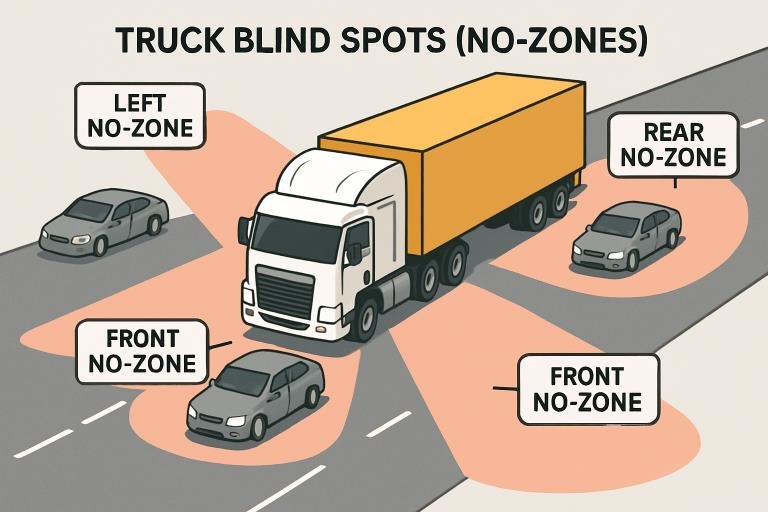
- Large trucks have persistent blind spots that smaller vehicles must avoid.
- Regulations are in place for driver safety but aren’t always uniformly enforced.
- Investing in advanced safety technology for trucks provides real-world benefits.
It’s also crucial to choose the right legal support after an accident. A personal injury law firm Indiana can help victims navigate post-accident complexities, advocating for the compensation they deserve.
Myth 1: Truck Drivers Are Always at Fault
One enduring belief is that truck drivers are the main source of risk in any collision involving a commercial vehicle. However, federal data shows a more complex reality. According to the Federal Motor Carrier Safety Administration (FMCSA), passenger vehicle drivers are responsible for a significant number of truck-involved crashes, often due to unsafe driving practices like abrupt lane changes, driving in blind spots, or failing to yield the right-of-way. Weather, road conditions, and vehicle malfunctions also play substantial roles in the causation of truck accidents.
Myth 2: Large Mirrors Eliminate Blind Spots
It’s a common misconception that modern trucks have eliminated blind spots with improved mirrors and cameras. In truth, every car has several “no-zones”—areas where the driver’s visibility is severely limited. These blind spots are located directly behind the trailer, along the sides, and immediately in front of the cab. The National Highway Traffic Safety Administration (NHTSA) notes that drivers of smaller vehicles are at higher risk when they linger in these areas. Staying visible and never cutting too closely in front of a truck can significantly reduce collision risk.
Myth 3: Trucking Regulations Are Consistently Enforced
Regulations, including hours-of-service rules, limit how long truck drivers can spend behind the wheel to prevent fatigue. However, the reality is that enforcement of these laws can be inconsistent due to resource constraints or pressure to meet tight delivery schedules. Some drivers unfortunately exceed allowed driving hours, leading to an increased risk of fatigue-related accidents. FMCSA attributes a significant portion of serious crashes to driver fatigue, equipment failures, and evasive driving by other motorists.
Myth 4: Implementing Safety Technology Is Too Costly
The notion that advanced truck safety tech is unaffordable for fleets—especially small operators—remains widespread. Advanced emergency braking systems, lane-departure warnings, and telematics were once seen as optional luxuries. However, organizations like the AAA Foundation demonstrate through research that the cost of outfitting trucks with such technology pales in comparison to the costs of accidents, in both injuries and financial losses. Broad implementation could prevent tens of thousands of accidents every year, ultimately saving both lives and money.
Myth 5: Truck Accidents Are Rare
There is a perception that truck-involved accidents are infrequent, but statistics reveal otherwise. In fact, large trucks are commonly involved in serious and fatal collisions. The Insurance Institute for Highway Safety reported that over 4,700 people died in crashes involving large trucks in the U.S. in 2021 alone. Commercial vehicles make up a relatively small percentage of overall traffic, yet are disproportionately engaged in dangerous multi-vehicle crashes.
Myth 6: Seat Belts Are Unnecessary for Truck Drivers
Some mistakenly believe that because trucks are large and well-built, their drivers don’t need to wear seat belts. In reality, seat belt usage is a simple and effective way to save lives in a crash, regardless of vehicle size. The Occupational Safety and Health Administration (OSHA) and other authorities strongly urge and require seat belt use for all commercial drivers. Failing to buckle up continues to contribute to preventable fatalities among truck operators.
Myth 7: Drafting Behind Trucks Saves Fuel
It’s true that drafting behind large vehicles can decrease air resistance, theoretically saving fuel for the trailing car. In practice, however, this maneuver means driving dangerously close to the truck, drastically reducing reaction time and increasing the likelihood of catastrophic rear-end collisions. The slight potential fuel savings are never worth the safety risks—maintaining a safe following distance is the responsible choice for all drivers.
Conclusion
Dispelling these common myths is essential to improving road safety for truck drivers and all motorists. Instead of relying on outdated beliefs, everyone should prioritize best practices for safe driving and seek out credible sources of information. With greater awareness and action, we can help reduce the prevalence and severity of truck-involved accidents on our nation’s highways.